Common uses of Calendarization on the Job (Go to section).
In this article, we will make the definition of ‘Calendarized’ very clear. Then, with a quick read here, you will be able to answer the common questions on this topic:
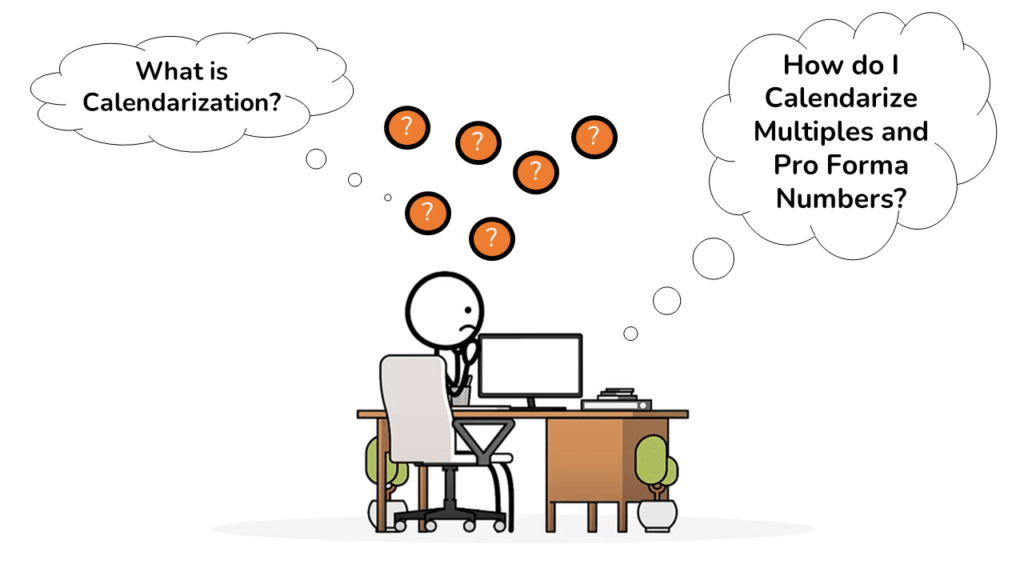
What is Calendarization?
How do you Calendarize Financial data?
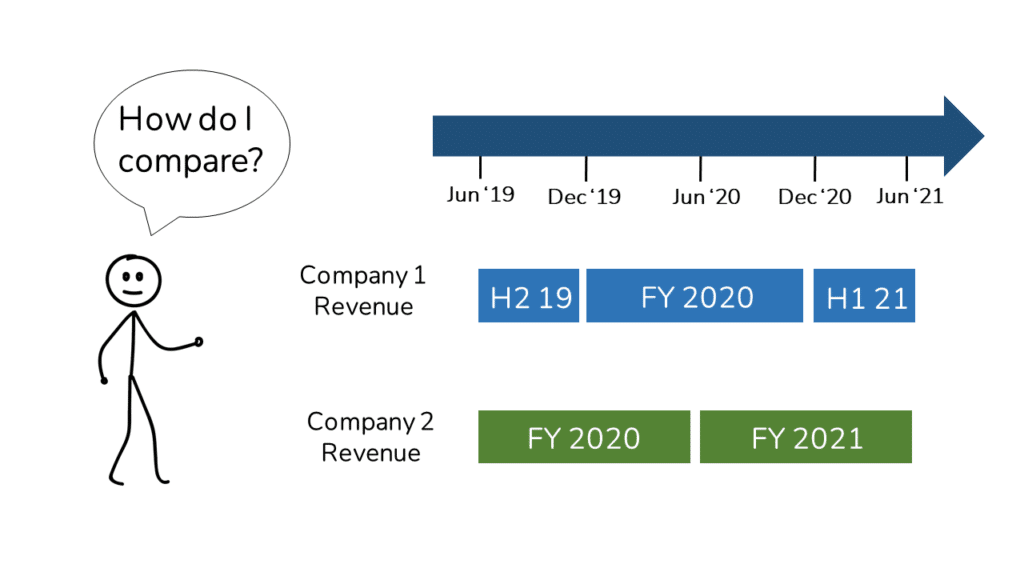
How do we align companies with different Fiscal Years?
Let’s start with how do we define ‘Calendarization?’
The Meaning of Calendarization
In short, a Calendarization is a process of aligning two Companies‘ Fiscal Years (FY) to create aconsistent year-end for both companies.
Analysts use Calendarization because the Company Reporting Calendar for many businesses does not align with the standard Calendar Year.
A fair question to ask at this point is, ‘Why don’t all companies just report based on a Calendar Year?’
Let’s jump ahead and see.
Why don’t Fiscal and Calendar Years align?
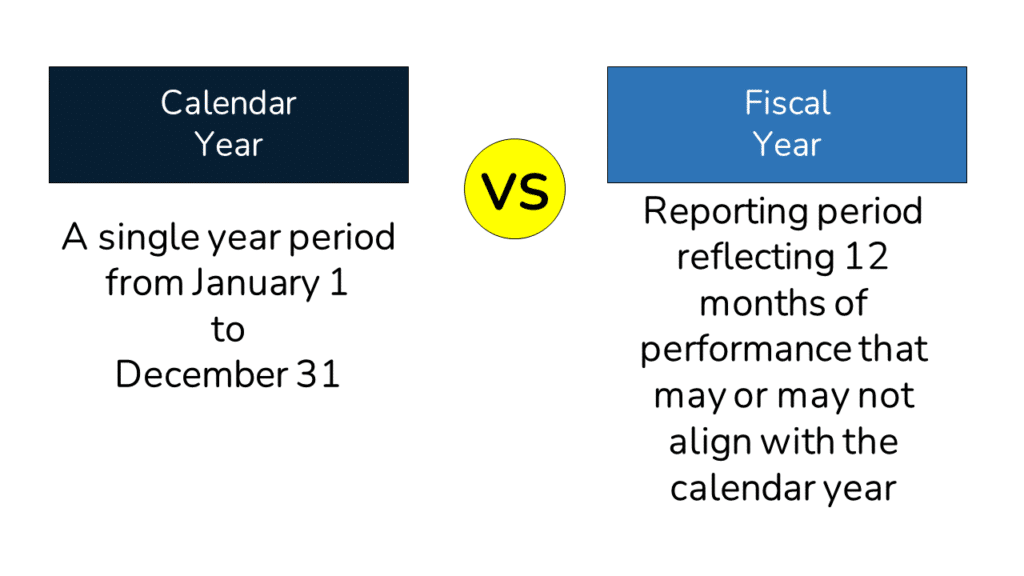
As we said above, many companies choose to report their numbers based on Fiscal Years (abbreviated as ‘FY’ in Finance) that do not align with the Calendar Year (abbreviated as ‘CY’ in Finance).
But, how do we explain Fiscal Year ends that don’t align with the Calendar Year?
The short story is that Companies typically choose a Non-Calendar Year-End to align with the flow of their business.
In short, if there are recurring, significant intra-year spikes in business within a year (i.e. Seasonality), companies often aim to report after the largest period ends.
It is also operationally difficulttocompileFinancial numbers amid the craziness that comes with peak Business periods.
Below are a few examples of industries and companies with non-calendar Fiscal Year Ends (often abbreviated as FYE in Finance):
Industry-Specific Examples
Retail (Fiscal Year End 2/1) – typically report after the Christmas holidays.
Company-Specific Examples
Apple (Fiscal Year End 9/30) – reports after the big product release each September.
H&R Block (Fiscal Year End 4/30) – reports following the end of Tax Season each year.
A Visual Overview of Calendarization
To begin our discussion on Calendarization, let’s revisit the example from earlier in the article.
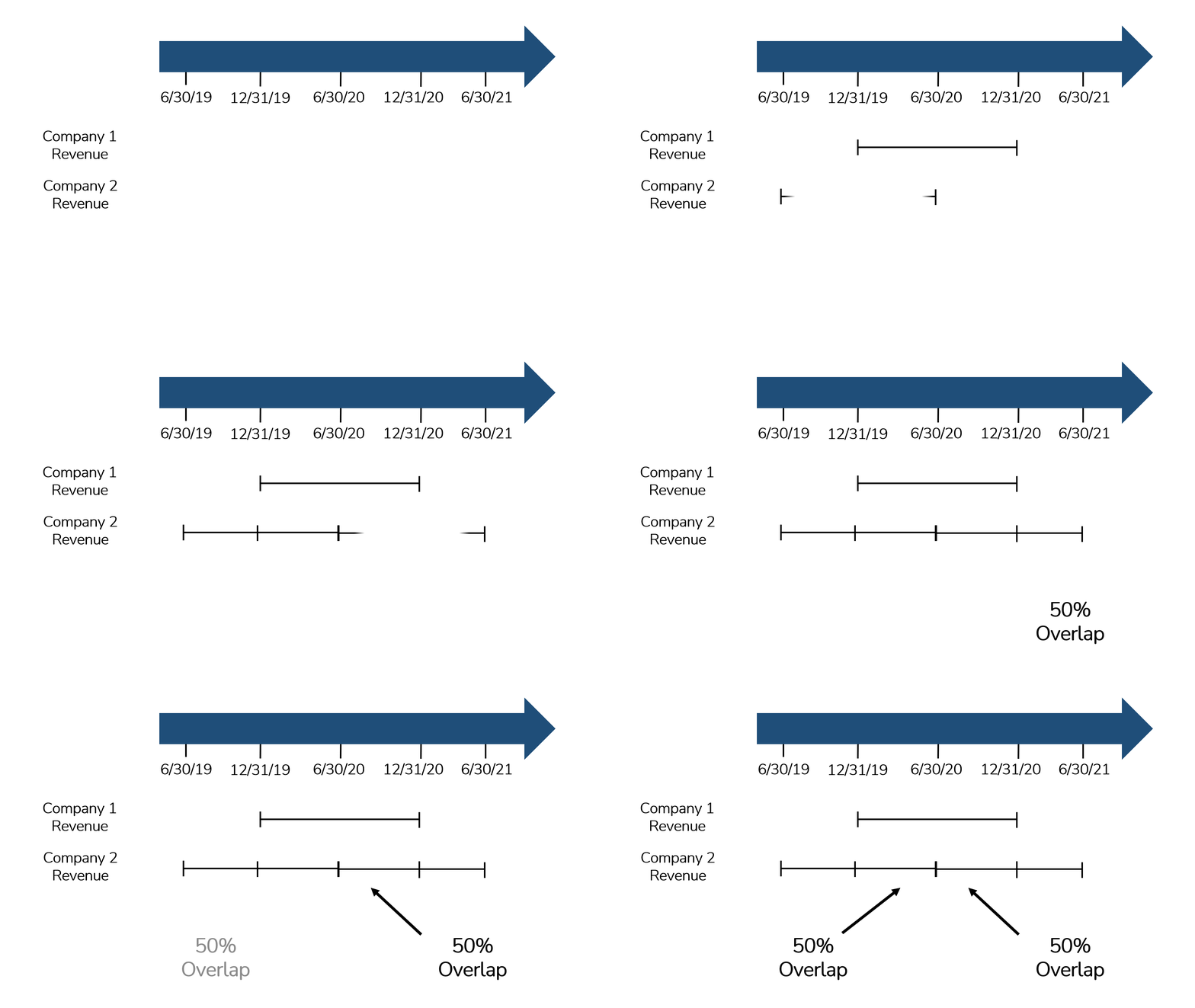
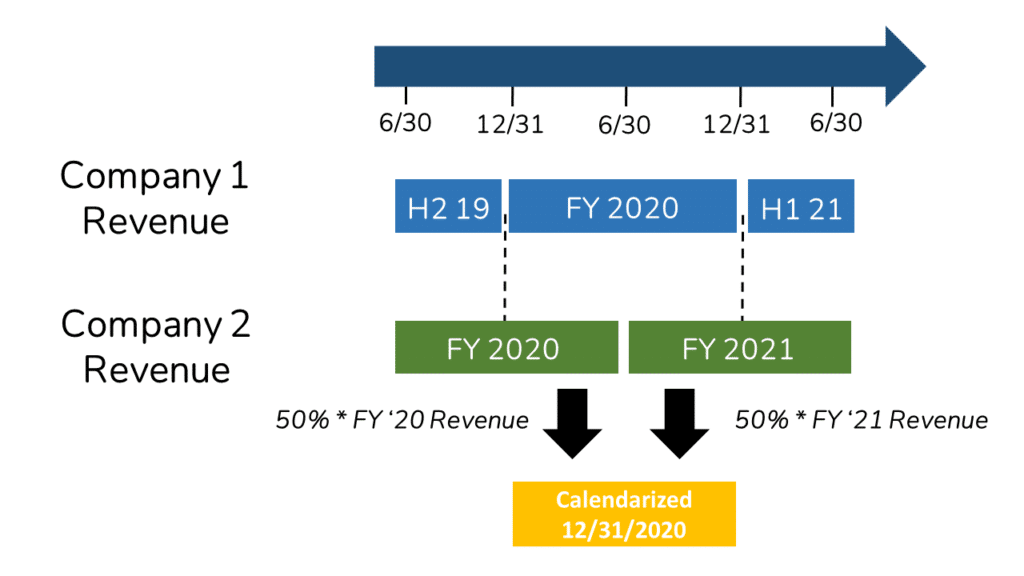
In that example, we had Company 1 with a Calendar Year-End (December 31st) and Company 2 with a Fiscal Year Ending on June 30th.
As you can see below, Company 2 has 50% overlap in each Fiscal Year with Company 1.
To Calendarize Revenue for Company 2, we would multiply the overlapping percentage of the year (50%) by FY 2020 Revenue.
We would then multiply the overlapping percentage of the year (again 50%) by FY 2021 Revenue.
The net result is a calendarized Revenuefor the 12 months ended 12/31/2020.
In the next section, we boil the Calendarization process into a simple, 2-Step process.
How to Calendarize in 2 Steps
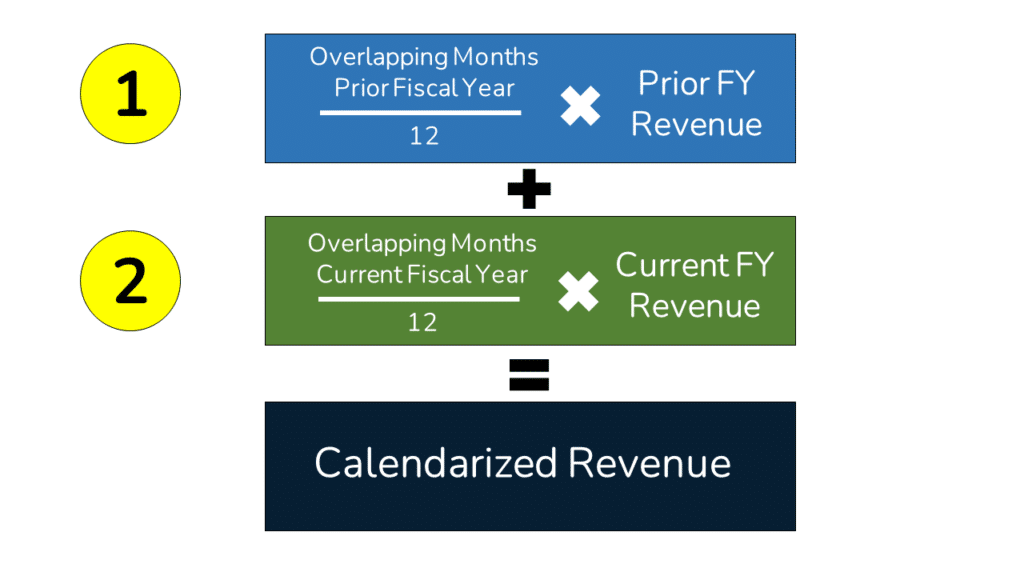
The Calendarization Formula requires just two steps.
We will Calendarize Revenue in this example.
But, note that you can use the process above to ‘Calendarize’ any item on an Income Statement or Cash Flow Statement.
How to Calendarize in 2 Steps
Find Percentage Overlap from Prior FY and Multiply by Prior FY Revenue Find the number of months for which the prior Fiscal Year overlaps with the year-end to which you’re aligning. Next, divide the number of months by 12.
Next, find Revenue for the Prior Fiscal Year the Company. You can find this in the Company’s public financial filings (SEC Edgar Search).
If you are doing this exercise for your Company or a Privately held Client, you will likely need to ask the Accounting department or the Client respectively for the numbers.
Finally, divide the number of months by 12. Then multiply the percentage overlap by the prior Fiscal Year Revenue.
Find Percentage Overlap from Current FY and Multiply by Current FY Revenue Find the number of months for which the current Fiscal Year overlaps with the year-end to which you’re aligning.
Next, find Revenue for the current Fiscal Year for a Company. You’ll use the same data sources for the numbers as in Step 1.
Finally, divide the number of months by 12. Then multiply the percentage overlap by the current Fiscal Year Revenue.
Below we walk through this process with two real companies: Nike and Skechers.
A Simple Example with Nike and Skechers
Let’s imagine that you need to compare Revenue for Nike and Skechers.
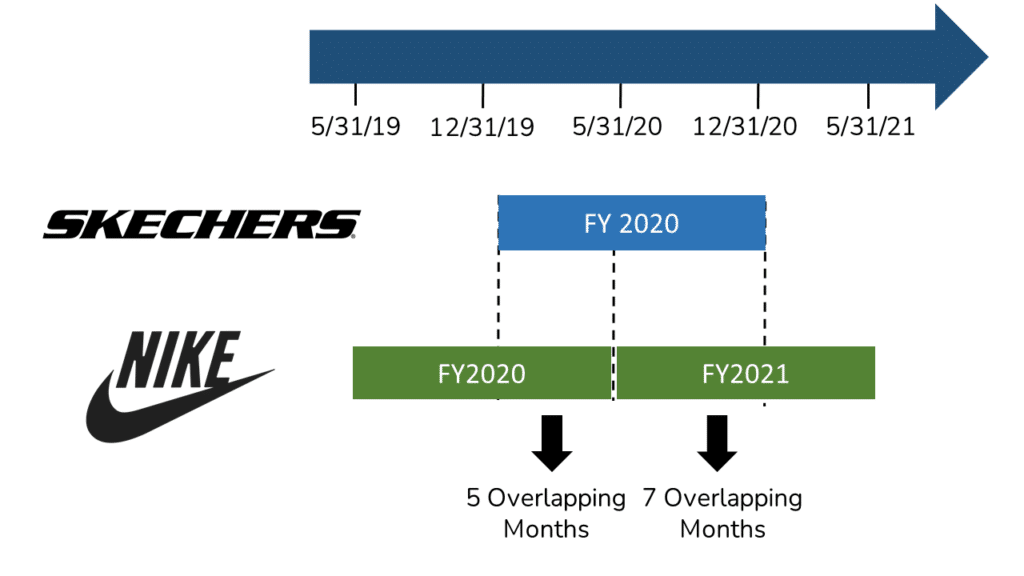
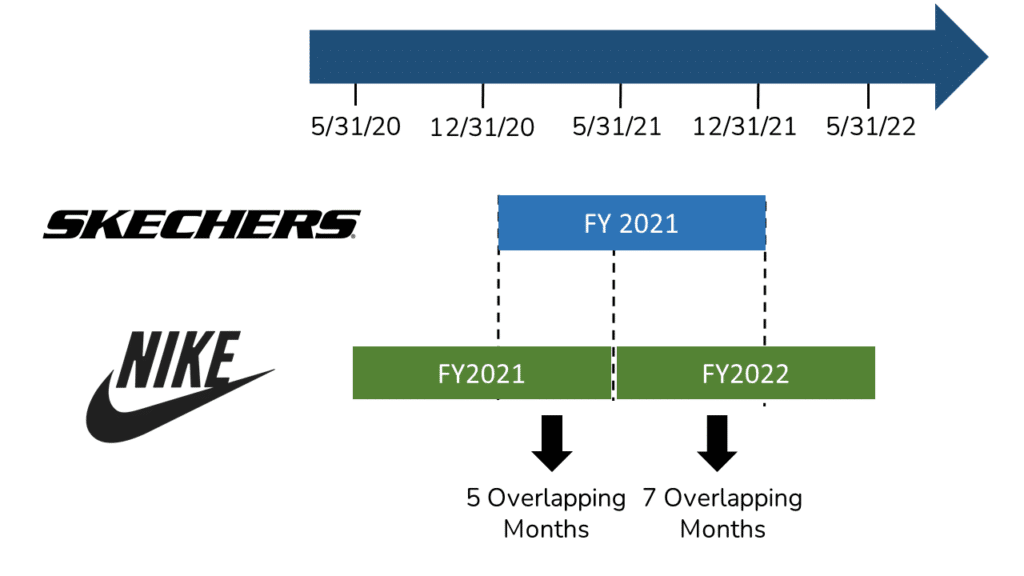
Skechers’ Fiscal Year ends on December 31stof each year. On the other hand, Nike’s Fiscal Year ends on May 31st.
So we will need to Calendarize Nike’s numbers to make them comparable to those of Skechers.
We will begin by finding the number of months for which Nike’s Fiscal Year overlaps with Skechers.
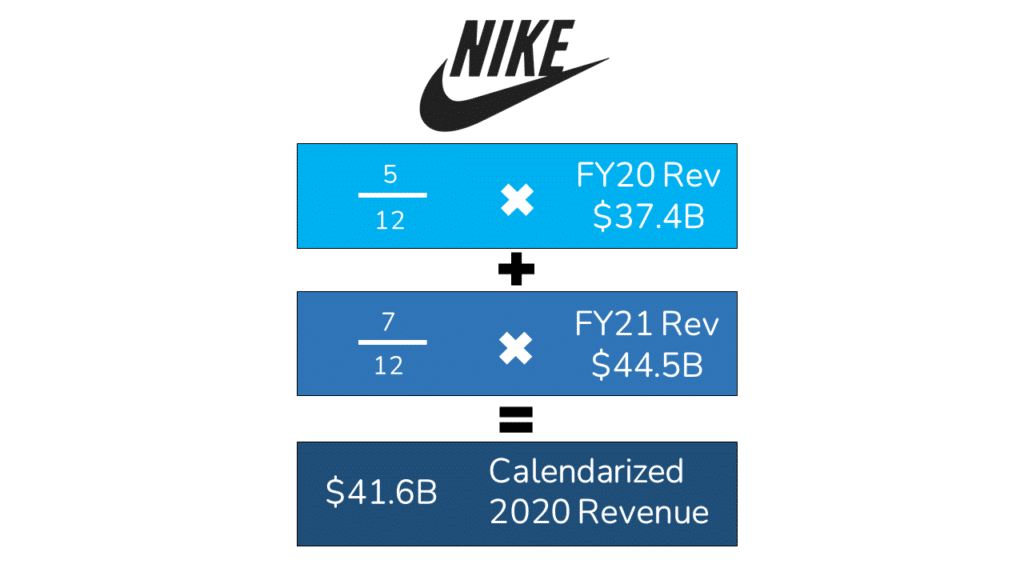
We would then divide the number of overlapping months by 12 for the current and prior fiscal years to calculate the percentage of each year for which Nike overlaps with Skechers.
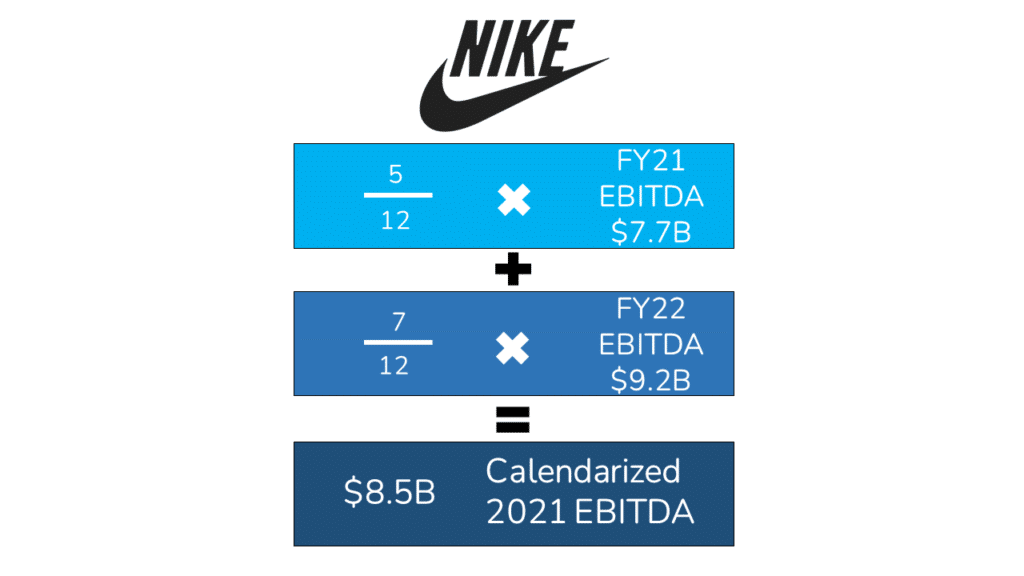
Finally, we would multiply the percentage overlap by the prior and current Fiscal YearRevenue to arrive at Nike’s Calendarized Revenue for 12/31/2020.
Now let’s look at a common on-the-job application of Calendarization.
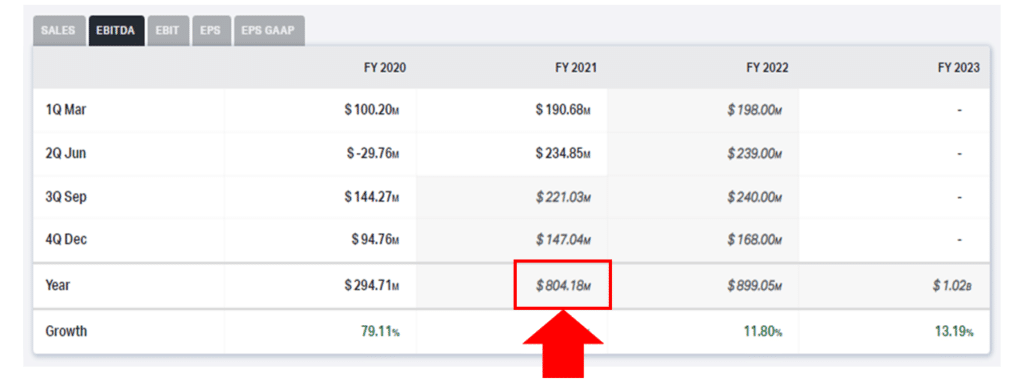
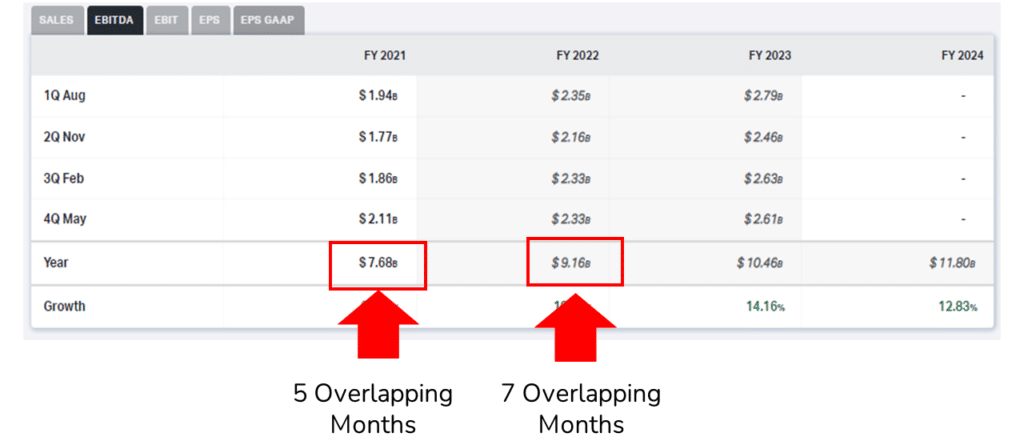
For Nike, however, we must CalendarizeFY 2021 EBITDA ($7.7 billion) and estimated FY 2022 EBITDA ($9.2 billion) to create a Calendar Year Ended 2021 estimated EBITDA.
Calculating Pro Forma Multiples for a Merger Model.
As for why the multiples are so different, that’s a conversation for another day!
Wrap-Up: Calendarization
Hopefully, you now have a much better understanding ofCalendarization. And also understand the underlying ideabehind Calendarization.
Calendarization is important because it helps us to compare companies with different Fiscal Year Ends.
Let us know if you have any questions in the comments below. We’d love to hear from you!
About the author
Mike Kimpel is the Founder and CEO of Finance|able, a next-generation Finance Career Training platform. Mike has worked in Investment Banking, Private Equity, Hedge Fund, and Mutual Fund roles during his career.
He is an Adjunct Professor in Columbia Business School’sValue Investing Program and leads the Finance track at Access Distributed, a non-profit that creates access to top-tier Finance jobs for students at non-target schools from underrepresented backgrounds.
Frequently asked questions
What does Calendarization mean?
Calendarization is the process of aligning financial metrics for companies with different fiscal year-ends to make their numbers consistent. Analysts use Calendarization in various cases ranging from aligning estimated data to calculating pro forma numbers for an M&A analysis.
Why do we calendarize financials?
We calendarize company financials because companies do not always report based on the same Fiscal Year End. Calendarization allows us to compare companies based on the same year-end.
What is a Fiscal Year?
A fiscal year is the reporting period chosen by a business reflecting 12 months of performance. The Fiscal Year may or may not align with the calendar year.
How are fiscal years determined?
Companies often choose non-calendar year periods for their businesses when they have significant intra-year spikes in their business.
For example, retailers generate a significant portion of their Revenue during the holiday season. As a result, they often set their Fiscal Year End to the end of January.
This gives them time to prepare their numbers after the craziness of the Holidays season has subsided.